
Theory of Change
Our assessment
Today's movements are plagued by vicious cycles of repression and reaction. People around the world are struggling to survive under authoritarian regimes, the New Confederacy, fascism, war, climate crises, funding cuts, disappearing social services, intimate violence, and everything in between. Without the tools to respond rooted in what we care about, we are left with no choice but to react to the imminent harm. In some situations, all we can (and must) do is react, but in the times where more is possible many of us are stuck in that reactivity and unable to vision a better future. This is because of a basic function in our bodies – specifically our nervous systems – to shut down as many systems of the body as possible to focus on surviving an imminent threat. In most animals, this reaction lasts only a few moments before they shake it off and return to a regulated state. But in humans, we are susceptible to over-intellectualizing, complex post-traumatic stress, and other conditions that keep us stuck in a single state or way of being.
When our movements remain in this cycle of reactivity or are otherwise stuck in an adrenalized state we:
Lose our ability to strategize and see into the future
Make fear-based decisions
Narrow our vision
Coordinate ineffectively, or not at all
Fail to hold complexity or contradictions leading to cancel culture and narrow/sectarian politics
Favor solo leadership and individualism: famous activist culture, single leaders, losing connection to base and real relationship
Burn out: leaving the movement, responding/organizing from burn out and depletion
Lose the ability to compel people to enter movement and then keep people in (high turnover)
Experience increased chronic pain and illness
Compete over resources: getting subsumed by the NPIC and forgetting we are on the same team
Forget our targets and instead turn on each other
Fall into dichotomized thinking
Isolate healing and care work from “the real work” of organizing: leading people to leave movement when they inevitably face trauma that needs tending to.
These reactive states leave us even more vulnerable to state repression, threaten the longevity of our organizations, diminish our ability to absorb new people, and cause us to lose many of the people already in our bases and communities.
Our Impact
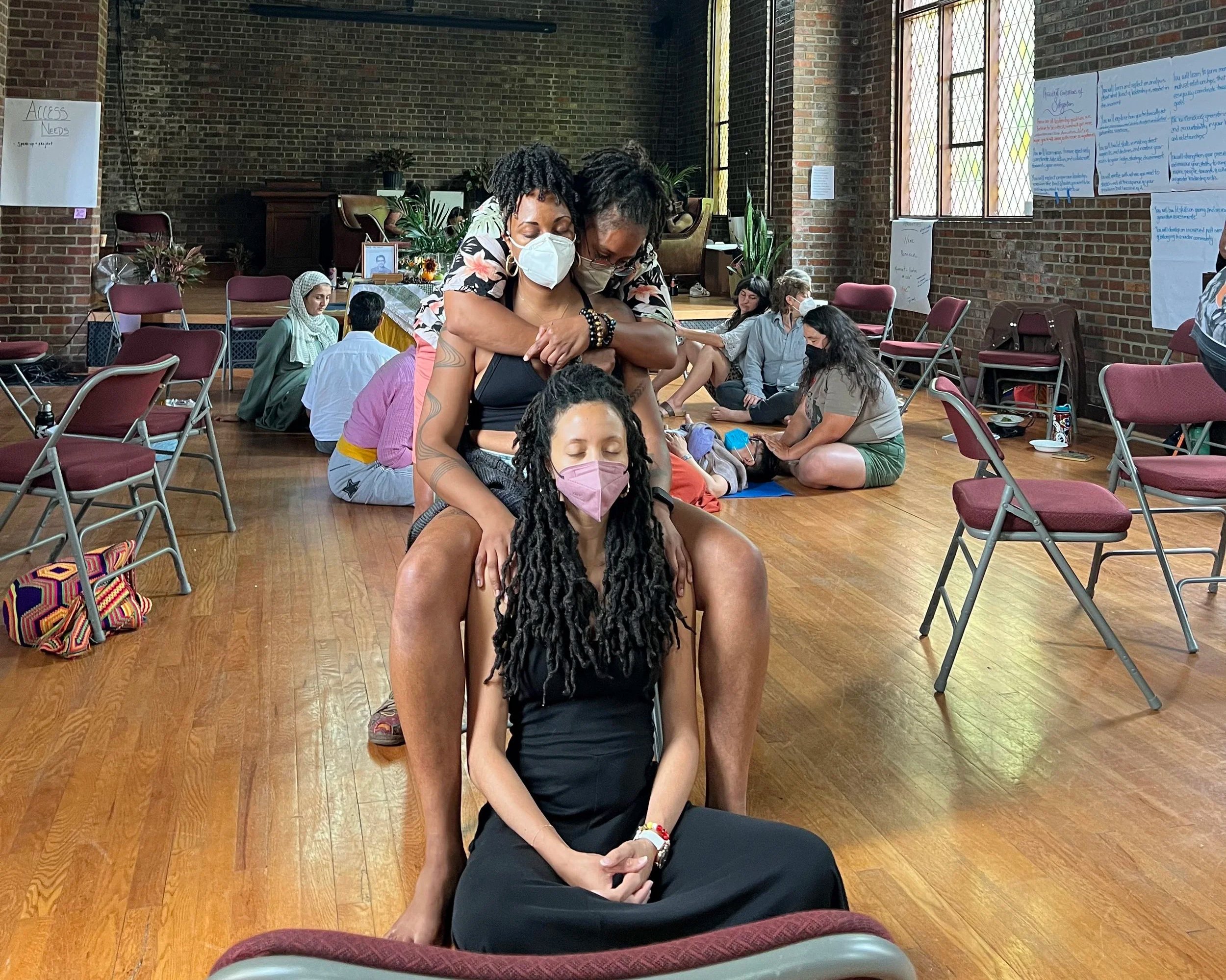
We understand systems of domination to play out on societal, organizational, interpersonal, and embodied levels - all of which can impact the efficacy and sustainability of our movement organizations. Our relationships with our bodies, each other, and the land have the potential to be the swords, the networks, the invitations, the rebellions we need. SEAL equips leaders with embodied tools to navigate increased pressures while building new worlds. This includes tools for down-regulating our nervous systems to return to a state of creativity, vision, and collaboration. It also includes tools for up-regulating our nervous systems intentionally to push back against power, to express our rage, to take action, and to compel others to do the same. By supporting the resiliency and power of movement leaders, embodied practice impacts an array of sectors positioned to build the kind of power our communities most need.
We work to impact…
Organizations & Movements:
Resourcing multi-racial communities (individuals, teams, and organizations) made up of:
Queer and trans people
Organizers and leaders at all levels, various roles,
Southerners
Multiple generations
Organizational + movement culture change - towards collaboration, power-building, united Left that can engage in principled struggle
More clear and effective communication
Boundary setting and risk taking
Giving and receiving generative assessments
Increased coordination on a team
Ability to step out to rest and then return to the work,
Following as a leadership skill (ability to follow someone’s lead, coordinate, take turns leading)
More joy, pleasure, and connection in movement work
Continued relevance in changing terrain
Culture & Care Work:
Interrupting the white washing and individualization that happens when cultural modalities and healing technologies are mainstreamed in the U.S.
Challenging cultural appropriation in favor of honoring and uplifting the roots of practice, including reclaiming our own lineages
Moving beyond capitalist exchanges of “wellness” and “care” to offer tools for collective resilience and resistance
Uplifting the history and legacy of politicized somatics (before these terms even existed)
Refusing the de-politicization of healing work
Cultivating cultures of care that reflect the world our movements are fighting for and building towards
Reintegrating spirituality into our bodies and our organizing
Supporting powerful, fun, creative, and resourcing collaborations